
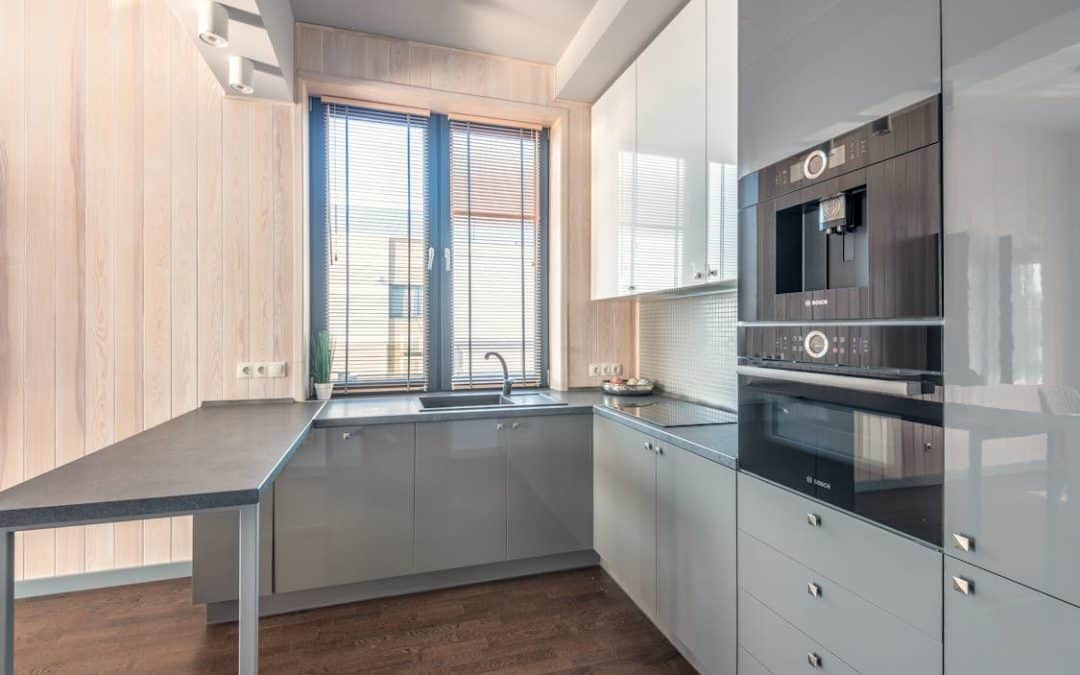
A tight kitchen can feel bigger with a handful of smart choices that change how the eye moves through the room, and a little planning will pay off every day. Light colored surfaces and reflective finishes can make walls recede while neat storage and clear pathways stop the room from feeling cluttered even when a lot is happening.
Small adjustments to cabinet height, lighting placement and countertop layout often deliver a surprisingly large visual boost that feels far greater than the effort involved. You do not need a full renovation to create the sense of breathing room in a busy cooking area, and many of the ideas below work within modest budgets.
1. Use Light Colors And Reflective Surfaces
Pale wall paint and subtle tonal contrasts trick the eye into seeing more depth, which helps narrow walls feel farther away and gives the ceiling a loftier presence. Glossy backsplashes, polished counters and metallic fixtures pull light into corners that would otherwise sit in shadow, adding little pockets of brightness that read as extra space.
A high gloss finish on a single wall or a strip of tiles can act like a mirror without overwhelming texture choices elsewhere, while small reflective accents break up any monotone flatness. Keep the ceiling lighter than the walls; sight lines tilt upward and the room reads as taller than it truly is.
Glass cabinet doors and reflective panels on appliance faces can double visible space by bouncing light from windows and lamps, and they let you show off a few attractive items without creating clutter. Worktops in a light neutral tone create a continuous plane for the eye while subtle veining or patterning hides crumbs and stains so surfaces stay attractive between cleanings.
A little contrast around edges prevents the scheme from looking flat and keeps surfaces readable under varied light sources, which matters when evening tasks replace daylight. A fresh coat of paint works wonders when you select hues that expand rather than contract visual space, and a careful choice of finish enhances that effect.
2. Maximize Storage With Clever Cabinetry
Floor to ceiling cabinets make use of vertical real estate and keep frequently used items easy to reach when they are placed at hip or eye level, which reduces the need to leave counters cluttered. Pull out drawers, narrow pantry towers and tall pan organizers remove piles from counters and place them out of sight while making access swift and predictable.
If you want a storage layout tailored to your specific needs, it’s worth consulting with expert kitchen designers in Kitchener Waterloo who can help optimize every inch of your space.
A deep drawer for pots and a shallow drawer for cutlery create a system that matches the shape of what you own, cutting time spent searching and helping the kitchen stay orderly. Custom interiors with adjustable shelves give flexibility, allowing future additions to fit without a scramble and keeping the system useful for years.
Use the space above cabinets for seasonal items and label boxes helping the top shelf stay useful rather than turning into a dust magnet, which keeps rarely used items from spilling into everyday zones. Open shelving can work when items are grouped and repeated to create a neat rhythm, which reads lighter than a jumbled display and supports a breezy feeling even with visible storage.
Corner units with rotating trays or pull out carousels make the most of awkward pockets that otherwise become dead zones, turning them into accessible places for pots or small appliances. If storage is tight, add slim vertical racks for baking sheets and cutting boards, and hang utensils in simple rails so counters remain clear for meal prep.
3. Keep Sight Lines Open
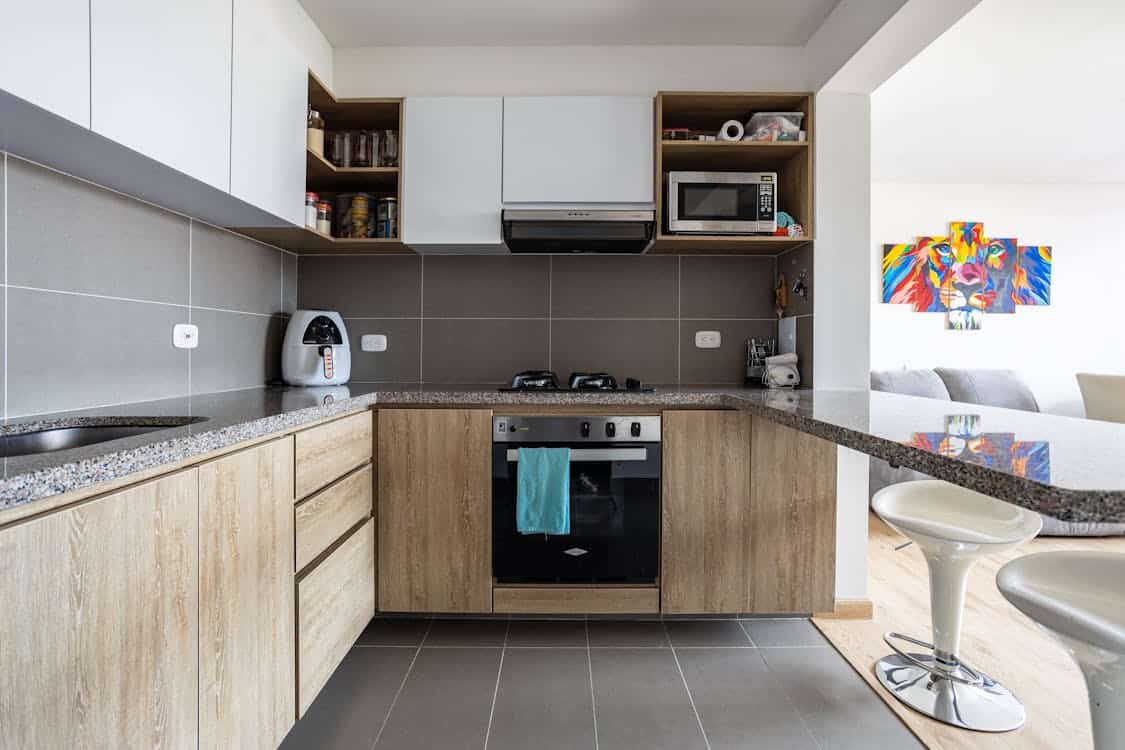
An uninterrupted view across the kitchen tricks the brain into thinking there is more room to move, and that quality matters even in long narrow layouts where every inch counts. Lowering a row of upper cabinets, or using glass fronts, opens a wall visually while still providing storage for daily items and lightening the overall feel.
Avoid blocking the path between refrigerator, sink and stove with islands that are too wide and pick narrow islands that let traffic flow naturally so people do not bump into each other during busy moments. Windows with minimal dressing and doors with large glass panels connect the kitchen to the outside and extend the visual perimeter, giving the sense that the room continues beyond its walls.
Place taller appliances to one side and keep the central zone low, allowing the eye to sweep across without interruption and creating a calm horizontal band for activity. A single continuous countertop line with a matching backsplash reduces visual breaks and makes surfaces feel like one long ribbon rather than chopped sections, which simplifies perception in a compact area.
Keep clutter in repeatable containers so shapes and colors form a pattern instead of a chaotic mass, and the eye finds order quickly in a tidy arrangement. A simple open shelf at eye level can offer a curated display that keeps tools handy without closing off the room, giving storage and style in the same breath.
4. Choose The Right Lighting Layers
Good lighting gives the impression of depth, and that extra dimension can turn a boxy kitchen into a space that breathes with warmth and practicality under different tasks. Combine overhead recessed or flush lights with under cabinet strips that illuminate worktops without casting heavy shadows, and place fixtures to highlight clear pathways as well as prep zones.
Warm or neutral temperature bulbs tend to flatter finishes and keep the space feeling inviting instead of clinical, which makes daily use more pleasant at every hour. Pendant lights make a stylish statement while doubling as task lights when hung high enough to protect sight lines and keep the ceiling plane visible.
Dimmers let you tune brightness to tasks from chopping to casual meals, making the room serve multiple purposes without a harsh glare and adding a sense of control to evening routines. Accent lights inside glass cabinets or under toe kicks add depth by creating layers of illumination rather than a single flat wash, which makes surfaces and corners read as distinct planes.
Natural light still has the biggest effect so think about window treatments that let light in while offering privacy for evening use, and maximize every glazing opportunity to blur boundaries between inside and out. Reflective surfaces mentioned earlier will multiply the impact of every light source, stretching perceived space further than fixtures alone could do.
5. Pick Scaled Furniture And Compact Appliances
Choose stools and chairs that tuck under counters to free floor space and keep pathways clear for quick movements between tasks, which matters most when more than one person cooks. A narrow table or a pull out dining leaf gives eating space without permanently eating up the floor and lets the area shift from meal time to prep time with minimal fuss.
Slim islands with built in storage give prep room without demanding a full clearance zone around all sides, and they often become the most versatile piece in a small kitchen. Open backed seating reads lighter than bulky booths and keeps lines flowing through the room so the visual effect remains airy even when the space is in use.
Select appliances with trim panels or integrated fronts for a seamless look that reads as a single plane instead of a row of boxes, which reduces visual clutter and helps scales feel balanced. Compact double ovens, smaller dishwashers and drawer style microwaves keep functionality high while shrinking the visual footprint and freeing up cabinet space for everyday items.
Rounded table edges and narrow counter overhangs reduce bumps and allow easy movement for two people working together in a tight shift, keeping the kitchen safe and sociable. When layout forces tight quarters, choose movable islands on lockable casters that slide away on demand and bring back extra work surface when needed, giving flexibility without permanent compromise.